
I had intended on starting a series on money perspectives from different cultures. I wrote a post here and here to get started then I had so many other topics and then AI came into the picture that I had forgotten all about it until I came across an interesting Reddit post on retirement dysfunction.
As a timely coincidence (always seems to happen in my life this way), my physical therapist told me that she has had quite a few clients retire and all tell her that they regret it. Two random occurrences within a few days means it must be something I need to write about!
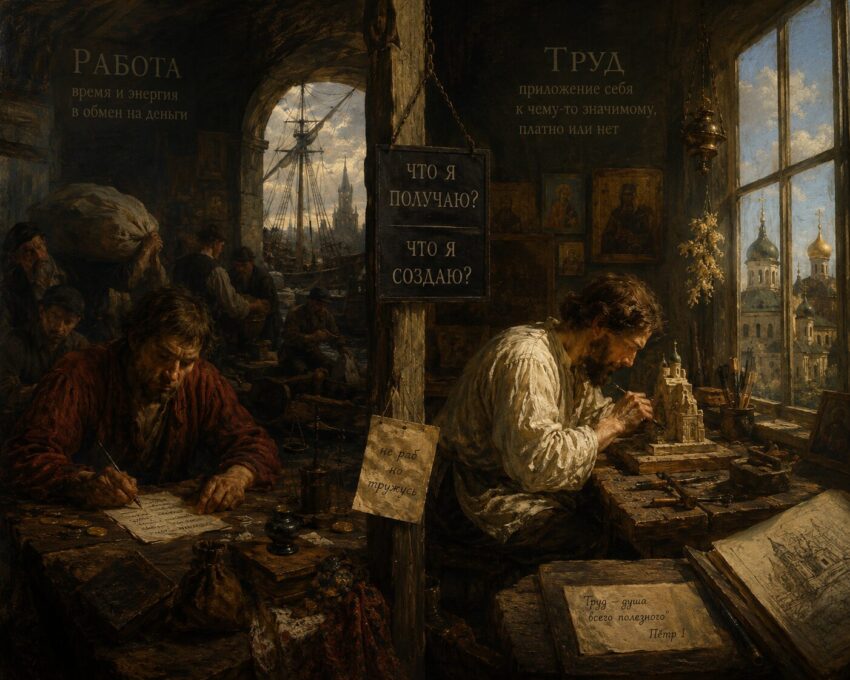
The Reddit post is from a Russian (babaykin) who tries to explain why he thinks people get “burned out” of their retirement. Babaykin introduces two concepts from Russian culture: rabota and trud.
Here is a small excerpt:
In Russian, we have two completely different words for what English collapses into “work”:
- работа (rabota) — exchanging your time and energy for money
- труд (trud) — applying yourself to something meaningful, paid or not
I haven’t done RABOTA since 2018. But I’ve never stopped doing TRUD — not for a single day. This distinction is what most of you missed during the accumulation phase.
You spent 10–15 years optimizing for the first thing. Savings rate, 4% rule, asset allocation, the spreadsheets. Nobody warned you that the second matters way more once the FI number is hit.
What I see in retired FIRE people who are happy versus miserable:
The miserable ones optimize for “doing nothing.” They genuinely believe the goal is the beach, the hammock, the no-alarm-clock life. Six months in, the brain starts eating itself. Brains didn’t evolve to do nothing — they evolved to solve problems. Remove the problems and the brain invents new ones. Usually anxiety, weird portfolio obsessions, midnight existential spirals, vague resentment toward the spouse who still has structure.
I asked AI to explain further and here is what it coughed up:
AI rabota & trud
These two Russian words point to a distinction that exists in many cultures but is rarely named so cleanly in English.
- работа (rabota) → work as obligation, labor-for-pay, survival
- труд (trud) → labor as meaningful effort, craftsmanship, contribution, vocation
They overlap, but emotionally and philosophically they carry very different weight.
Работа (rabota)
Rabota
This is the ordinary word for “job” or “work.”
But historically and emotionally, rabota carries a sense of:
- necessity
- external demand
- exchanging time for money
- duty imposed from outside yourself
The word is related to:
- раб (rab) — “slave”
- historically connected to servitude and compelled labor
So even in its linguistic roots, rabota hints at:
“I do this because I must.”
That doesn’t mean all paid work is degrading. It just frames work as transactional.
Examples:
- office jobs
- repetitive labor
- “clocking in”
- optimizing for income
- work detached from personal meaning
Someone can earn a lot from rabota and still feel spiritually empty.
Труд (trud)
Trud
Trud is effort that transforms:
- yourself
- the world
- other people
- a craft
- an idea
It’s closer to:
- vocation
- craftsmanship
- disciplined creation
- meaningful exertion
- contribution
A person may do trud:
- for money
- without money
- in art
- parenting
- science
- farming
- teaching
- building a community
- writing a book no one may read for years
The key idea is:
the labor matters beyond the transaction.
It has dignity independent of payment.
The deeper contrast
| Rabota | Trud |
|---|---|
| “What do I get?” | “What am I building?” |
| Transaction | Contribution |
| Survival | Meaning |
| External pressure | Internal commitment |
| Time sold | Self expressed |
| Replaceable labor | Personal craft |
| Fatigue without fulfillment | Effort with purpose |
Why this distinction resonates today
Modern economies heavily reward rabota:
- productivity metrics
- time tracking
- optimization
- scale
- efficiency
- “hustle”
But humans often hunger for trud:
- mastery
- purpose
- care
- creation
- leaving something behind
A lot of modern dissatisfaction comes from:
spending most of life in rabota while starving the need for trud.
That’s why people with prestigious careers can still feel numb, while someone restoring old furniture, raising children, or composing music may feel deeply alive despite lower status or pay.
They are not opposites
The ideal situation is often:
turning rabota into trud.
For example:
- a teacher paid to teach, but genuinely shaping lives
- a programmer building elegant systems they care about
- a carpenter whose income and craftsmanship align
The tragedy is when:
- rabota crushes the capacity for trud
- or when meaningful trud becomes impossible because survival consumes all energy
Similar distinctions in other traditions
There are echoes of this elsewhere:
- Ancient Greek:
- ponos (toil) vs meaningful practice/craft
- German:
- Arbeit sometimes carries a similar burdened feeling
- Japanese:
- ikigai touches the intersection of livelihood and meaning
- Marx:
- alienated labor vs self-realizing labor
- Christian monastic traditions:
- labor as spiritual practice
But Russian preserves the distinction unusually vividly in everyday language.
A concise way to put it:
Rabota is what you do to live.
Trud is what makes life feel worth living.
My Thoughts
I encourage you to read the link to the Reddit post and ask yourself if you’re prepared for retirement. I literally have thousands of things that I want to do when I retire that will drive meaning in my life: travel, building AI apps, helping family & friends, blogging, music, global theater (plays/opera/musicals/concerts), gardening/landscaping, tons of books on my reading list and making more money from my assets.
Any one of those items had hundreds of sub-activities so there is no shortage of “things to do” and I can’t possibly see a way I would get “burned out” unless I was simply sitting on a beach all day doing nothing. If I ended up on a beach for more than a few days, I would be tempted to buy fishing poles, snorkeling gear, renting a sail boat or any number of other things related to being on the beach.
Sadly, I think the people that feel lost in retirement are too “institutionalized” in whatever industry/company they worked in that they can’t adapt outside that institution.
Share The Wealth
Will you have good mental health when the work noise is finally turned off?